THREE: There was a time when nearly all penalties were pecuniary. Men¡¯s crimes were the prince¡¯s patrimony; attempts against the public safety were an object of gain, and he whose function it was to defend it found his interest in seeing it assailed. The object of punishment was then a suit between the treasury, which exacted the penalty, and the criminal: it was a civil business, a private rather than a public dispute, which conferred upon the treasury other rights than those conferred upon it by the calls of the public defence, whilst it inflicted upon the offender other grievances than those he had incurred by the necessity of example. The judge was, therefore, an advocate for the treasury rather than an impartial investigator of the truth, an agent for the Chancellor of the Exchequer rather than the protector and minister of the laws. But as in this system to confess a fault was the same thing as to confess oneself a debtor to the treasury, that being the object of the criminal procedure in those days, so the confession of a crime, and a confession so managed as to favour and not to hurt fiscal interests, became and still remains (effects always outlasting their causes so long) the centre[241] point of all criminal procedure. Without such confession a criminal convicted by indubitable proofs will incur a penalty less than the one legally attached to his crime; and without it he will escape torture for other crimes of the same sort which he may have committed. With it, on the other hand, the judge becomes master of a criminal¡¯s person, to lacerate him by method and formality, in order to get from him as from so much stock all the profit he can. Given the fact of the crime as proved, confession affords a convincing proof; and, to make this proof still less open to doubt, it is forcibly exacted by the agonies and despair of physical pain; whilst at the same time a confession that is extra-judicial, that is tendered calmly and indifferently, and without the overpowering fears of a trial by torture, is held insufficient for a verdict of guilt. Inquiries and proofs, which throw light upon the fact, but which weaken the claims of the treasury, are excluded; nor is it out of consideration for his wretchedness and weakness that a criminal is sometimes spared from torture, but out of regard for the claims which this entity, now mythical and inconceivable, might lose. The judge becomes the enemy of the accused, who stands in chains before him, the prey of misery, of torments, and the most terrible future; he does not seek to find the truth of a fact, but to find the crime in the prisoner, trying to entrap him, and thinking it to the loss of his own[242] credit if he fail to do so, and to the detriment of that infallibility which men pretend to possess about everything. The evidence that justifies a man¡¯s imprisonment rests with the judge; in order that a man may prove himself innocent, he must first be declared guilty: that is called an offensive prosecution; and such are criminal proceedings in nearly every part of enlightened Europe, in the eighteenth century. The real prosecution, the informative one¡ªthat is, the indifferent inquiry into a fact, such as reason enjoins, such as military codes employ, and such as is used even by Asiatic despotism in trivial and unimportant cases¡ªis of very scant use in the tribunals of Europe. What a complex maze of strange absurdities, doubtless incredible to a more fortunate posterity! Only the philosophers of that time will read in the nature of man the possible actuality of such a system as now exists.
FORE:
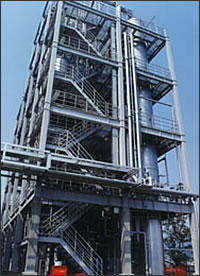
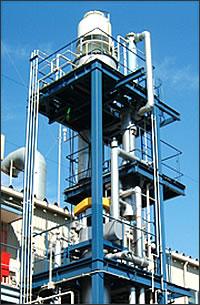
Methanol refinement systems, amyl alcohol refinement systems, ethanol refinement systems, hexanol distillation systems, propanol refinement systems, cyclohexanol distillation systems, isopropanol dehydration systems, ethylene glycol recovery systems, and butanol distillation systems.
FORE:Are torture and torments just, and do they attain the end which the law aims at?[66]
Hexane distillation systems, tall oil distillation systems, benzene distillation systems, lubricating oil refinement systems, xylene-free distillation systems, low-boiling gas distillation systems, ethylbenzene recovery systems, fusel oil distillation systems, naphthalene distillation systems, propylene recovery systems, and turpentine oil distillation systems.
FORE:The lighting of a city by night at the public expense; the distribution of guards in the different quarters; simple moral discourses on religion, but only in the silent and holy quiet of churches, protected by public authority; speeches on behalf of private and public interests in national assemblies, parliaments, or wherever else the majesty of sovereignty resides¡ªall these are efficacious means for preventing the dangerous condensation of popular passions. These means are a principal branch of that magisterial vigilance which the French call police; but if this is exercised by arbitrary laws, not laid down in a code of general circulation, a door is opened to tyranny,[221] which ever surrounds all the boundaries of political liberty. I find no exception to this general axiom, that ¡®Every citizen ought to know when his actions are guilty or innocent.¡¯ If censors, and arbitrary magistrates in general, are necessary in any government, it is due to the weakness of its constitution, and is foreign to the nature of a well organised government. More victims have been sacrificed to obscure tyranny by the uncertainty of their lot than by public and formal cruelty, for the latter revolts men¡¯s minds more than it abases them. The true tyrant always begins by mastering opinion, the precursor of courage; for the latter can only show itself in the clear light of truth, in the fire of passion, or in ignorance of danger.
Ether distillation systems, camphor distillation systems, epichlorohydrin distillation systems, aniline distillation systems, dioxane refinement systems, acetonitrile distillation systems, furfural refinement systems, formalin distillation systems, cyclohexane distillation systems, monoethanolamine rectification systems, polyglycol ether distillation systems, dimethylformamide recovery systems, acrylic glycol ether distillation systems, acrylonitrile refinement systems, acetone recovery systems, pyridine distillation systems, methyl ethyl ketone recovery systems, picoline distillation systems, methyl isobutyl ketone recovery systems, and acetaldehyde recovery systems.